Canada Chose Its Shield
The Arctic exposed the gap. Canada must close it—with France.

In January this year, when Denmark rushed troops to Greenland to deny Donald Trump’s potential move, they did not go in light. They carried blood bags and explosives. The plan was simple and brutal: if it came to it, destroy the runways in Nuuk and Kangerlussuaq and deny any incoming force a landing strip.
It was a small group of soldiers. No match for the U.S. military in a straight fight. But that was never the point. They were there to put their lives on the line if needed—to raise the cost of any takeover, to make sure it would not come cheap, clean, or uncontested.
That is how seriously the threat was taken in Europe. And it explains what followed. France moved first. The United Kingdom followed. Carrier groups were pushed north. Air activity increased. Signals were sent, not in statements, but in posture.
It has now been weeks since Donald Trump and Stephen Miller spoke openly about Greenland. No one in Europe is under any illusion about what was said or what it implied. The response has been quiet, but it has not been passive.
If not for the follow-up steps taken by the French government, the situation could have drifted in a far more dangerous direction. The moment French stratotankers began flying sorties over Greenland, working alongside Danish fighter jets, the message was delivered clearly: this would not be uncontested airspace. Planning a move is one thing. Executing it is another.
And none of this began in January 2026.
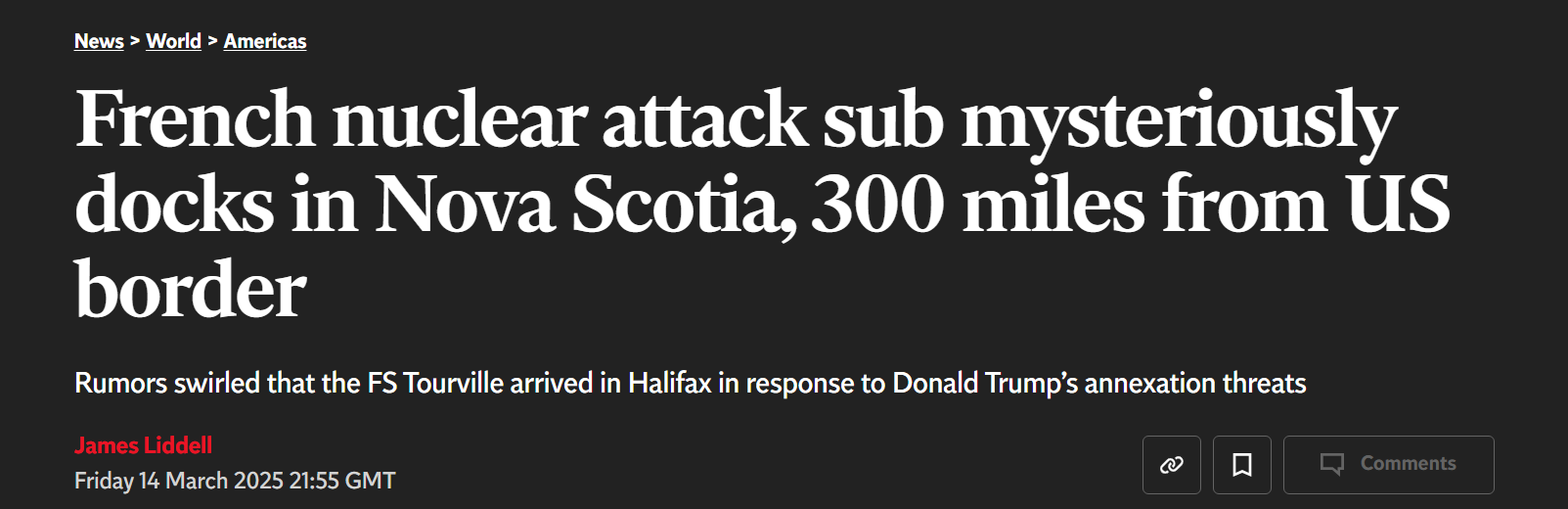
In March last year, FS Tourville, a French nuclear-powered attack submarine, surfaced in Halifax, Nova Scotia.