
Canada Secures Uranium
And today, the world is marginally safer than it was yesterday.

Canadian Prime Minister Mark Carney has left India. He is now on his way to Australia.
The broader trade deal Carney has been pressing since the G20 summit last September — the one aimed at doubling trade with India to nearly $70 billion — has not been signed. Talks are ongoing, the Prime Minister said.
Yes, we want to see that deal signed. It matters.
But the one deal we at The Concis have been waiting for with bated breath since the last week of January 2026— when we first heard serious negotiations were underway — is done.
Struck. Signed. Sealed.
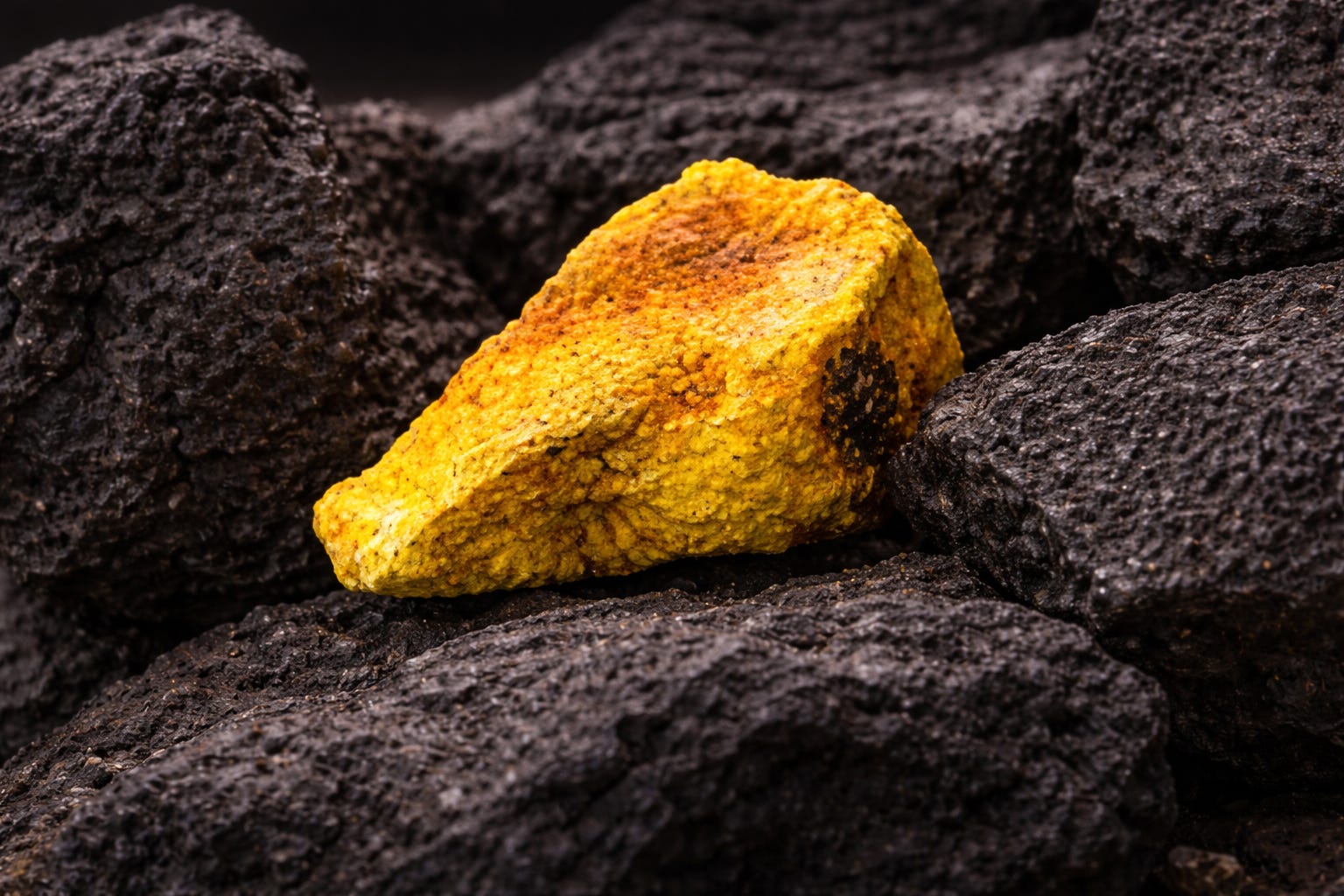
A $2.6 billion agreement between the Government of India and Canada’s Cameco to supply nearly 22 million pounds of uranium to India for nuclear energy generation from 2027 to 2035.
Reports indicate that Prime Minister Carney told his Indian counterpart that Canada plans to expand its heavy oil export infrastructure and scale LNG supplies into the Indo-Pacific — with India positioned as a key anchor market inside that strategy.
Energy corridors are being drawn. The oil and LNG story will matter — for India’s energy security and for Canada’s export posture — and we will dissect that properly on another day.
Today, we focus on the nuclear deal.
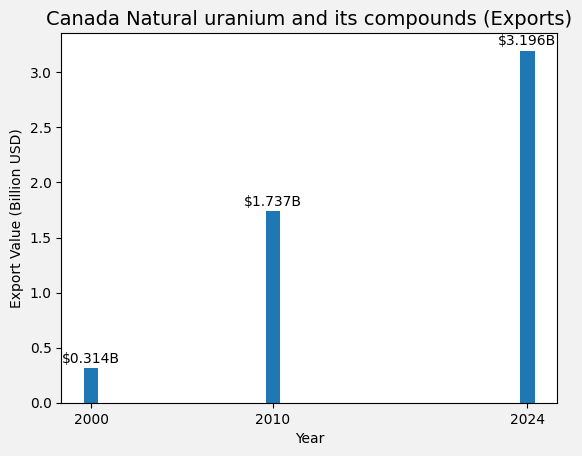
The global Uranium market has no where else but to grow. Canada itself offers clear evidence of where this market is headed.
India currently operates 24 commercial nuclear reactors, generating roughly 8.8 gigawatts of capacity. Another 13 gigawatts plus are either under construction or in advanced planning, with rollout expected through the early 2030s. And this is not incremental thinking. The long-term target is 100 gigawatts by 2047.
Canada has placed its hands firmly into this expanding market with a long-term deal. All of us would prefer a world that moved decisively toward renewables and left this nuclear fixation behind. That window has closed. Our generation does not get that version of history.
The architecture that once restrained nuclear ambition was built on three pillars: the NPT, the American nuclear umbrella over Europe, and NATO’s collective deterrence. Over the past several years, across two U.S. administrations — Biden and Trump — that containment stack has been eroded piece by piece. Mixed signals, strategic ambiguity, transactional deterrence. The credibility layer is done. Done in.
Early last year, we at The Concis recommended that France move rapidly to extend its nuclear umbrella over Poland. Not symbolically. Structurally. Ideally, Paris should construct a framework that reaches across the continent. President Macron signed the Nancy Treaty with Poland in May 2025, referencing security. Since then, movement has been limited. Statements do not alter deterrence math.
Poland is watching the board. If Putin secures a ceasefire, resets, and returns in one or two years, Warsaw understands the sequence. It is next in line. The next democratic meal.
It cannot assume a ceasefire ends imperial intent. It cannot assume a post-Putin Russia becomes liberal by instinct. As long as Russia remains a centralized dictatorship, it remains structurally incentivized to pressure, fragment, or absorb neighboring democracies.
And Poland is not alone. Other European states — including Sweden — have publicly pressed France to clarify and expand its nuclear guarantee. This is not a drift. It is strategic demand.
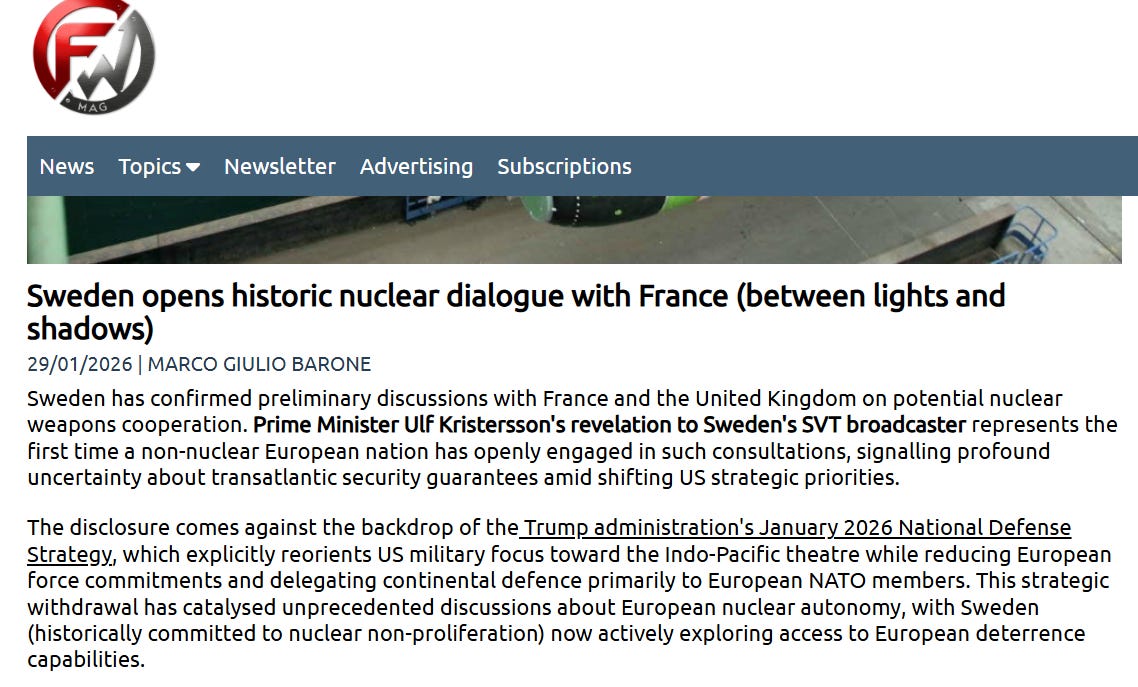
France is the only viable lever inside Europe capable of arresting the acceleration we are watching — the steady expansion of civilian nuclear energy that inevitably widens the pathway toward nuclear weapons capability. That is the structural reality.
How fast can France operationalize a continental umbrella? In what institutional structure? Under what command doctrine? And what happens if a right-wing government takes power in Paris and recalibrates the posture? These are not academic questions. They are the friction points that slow execution.
As of today, the nuclear fuel market — the middle of the chain — is dominated by Russia. China is moving aggressively in the same direction.
The three largest uranium reserve holders are Australia, Kazakhstan, and Canada. Yet Russia controls the leverage point because it holds more than 40% of global uranium enrichment capacity.
The chain itself is straightforward:
Mining.
Conversion.
Enrichment.
Fuel fabrication.
Russia leans on Kazakhstan for the first stage and has built deep capacity in stages two and three. That is where the choke point sits. As nuclear markets expand, that leverage expands with them.
If this trajectory continues, the democratic world returns to a familiar position — dependent on an autocratic system for a strategic energy input. And when that system aligns with another autocrat, wages a war, cuts supply, and weaponizes access, the demand will be simple: comply — or suffer economic crash.
We can’t keep doing this over and over. The world took far too long to recognize how slowly and methodically China established control over the critical minerals our industries depend on. Only in the last two years have major Western nations begun pushing seriously to reduce that dependency. As of today, the nuclear fuel market is drifting in the same direction.
Canada stepping into that market is a significant benefit for the entire world. It reduces the leverage of the global autocratic movement. And beyond that, there is one key factor to consider. Of the roughly $3.2 billion in uranium exports Canada recorded in 2024, nearly $1.2 billion went to the United States.

The deal Canada has struck will send close to $300 million worth of uranium to India annually. If India continues expanding its nuclear power generation, it could one day replace the United States as the largest customer of Canadian uranium.
And that alone is very good news for Canada.
Macron’s steps today increasing the French stockpile of nuclear warheads is a move in the direction of a European umbrella perhaps?
A deal not to be snuffed out…sorry, sniffed at.