
Shell Bets on Canada’s Escape Route
Can Canada become unavoidable?

Do little things matter?
Well, a C$22 billion deal is not exactly a little thing. But in the life of a top-ten economy, even a deal of that size can look like a signal more than an earthquake.
Canada is not some small resource state sitting quietly on the edge of the map. It is a material powerhouse. If the world had remained stable, it could have become one of the great renewable-energy powers of this century. Hydro, uranium, critical minerals, land, water, engineering capacity, political stability — Canada had the full stack.
But the world did not remain stable.
So now what sits under Canadian soil is no longer a climate-transition asset. It is a strategic treasure chest. Oil, gas, uranium, copper, nickel, potash, rare earths, and critical minerals are no longer viewed only through spreadsheets and emissions models. They are viewed through war plans, supply chains, tariff threats, battery factories, naval routes, and the slow collapse of trust in the United States.
That is why Shell’s acquisition of ARC Resources is not just another corporate deal. It is a signal that the margins are moving. In a world on fire, margins matter. Capital does not need a speech. It does not need a flag. It moves when it senses that political risk, infrastructure risk, and strategic demand are changing at the same time.
And this deal says something has changed in Canada.
Shell is buying ARC Resources in a deal worth about C$22 billion.
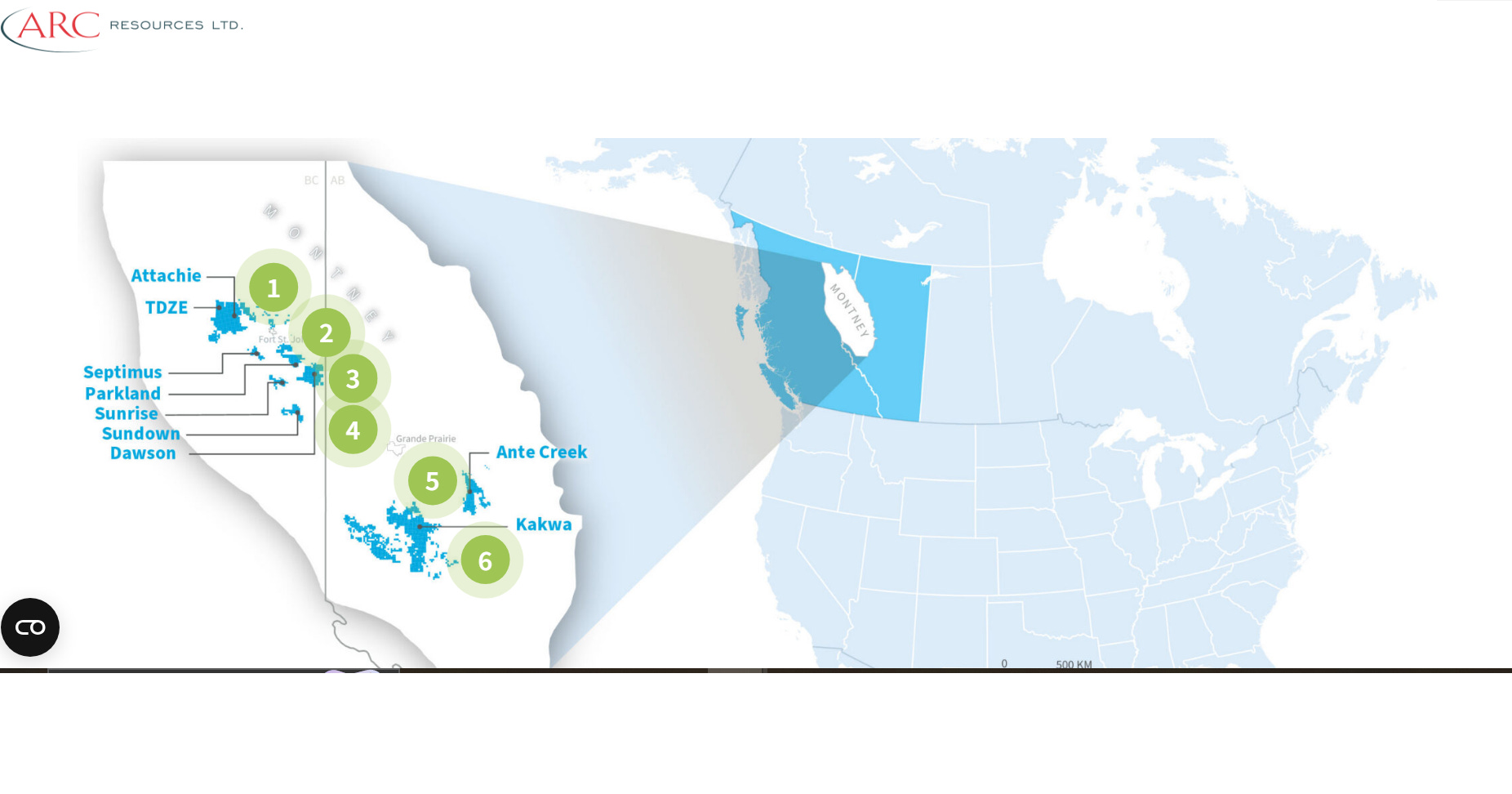
ARC is a major natural gas and crude oil producer in Alberta and British Columbia. Shell says the deal adds more than 1.5 million net acres to its existing roughly 440,000 net acres in the Montney, along with about 2 billion barrels of oil equivalent in proved-plus-probable reserves.
It also adds about 370,000 barrels of oil equivalent per day of production.
So this is not just Shell buying more Canadian energy. It is Shell deepening its position in one of Canada’s most important gas basins at the exact moment Canada is trying to stop being trapped inside the U.S. market.
That is the strategic point.
ARC’s low-cost Montney gas can support LNG exports. Shell already owns 40% of LNG Canada, the west-coast system that takes western Canadian gas, moves it across northern British Columbia, liquefies it near Kitimat, and ships it to Asia. So this is less about buying random production and more about securing feedstock for a Pacific export strategy.
That is why the deal is being read as a vote of confidence in Mark Carney’s push to expand Canadian hydrocarbon exports beyond the traditional U.S. market. And on this one, the American media frame is right.
The Carney government has put LNG Canada expansion on the fast-track list, backed a new Alberta-to-Pacific oil-export pipeline, and eased some of the regulatory pressure that has slowed Canadian energy projects for years. Shell is not blind to that shift.
Investors do not move before signals. But when they see one, and when one signal becomes many, they move.
Ottawa recently approved Enbridge’s C$4 billion Westcoast gas-pipeline expansion in British Columbia, aimed partly at LNG demand. Then Shell followed with a giant Montney acquisition.
That is how a shift starts to become visible.
The old Canadian energy model is broken. Canada has world-class resources, but for decades too much of its infrastructure pointed south into the United States. That was fine when Washington was predictable. It is not fine when the U.S. threatens tariffs, treats allies as leverage, and turns Canadian dependence into a strategic vulnerability.
Carney’s answer is export diversification: Pacific ports, LNG, critical minerals, trade corridors, and more non-U.S. buyers. Shell moved now because the political risk-reward has changed. The resources were always there. The Montney was always valuable. LNG Canada was already important.
What changed is Ottawa’s posture.
If the federal government is now more willing to approve infrastructure, support export corridors, and treat hydrocarbons as part of national strategy, then buying ARC becomes a cleaner bet.
That is why this deal matters beyond Shell and ARC.
It is a market vote on Carney’s post-American Canada. Capital is saying it believes Ottawa may finally build the pipes, ports, and export logic needed to sell Canadian energy to someone other than the United States.
Things are starting to pick up speed on the west coast. That is good.
Any LNG is better than no LNG, because sending almost all natural gas exports to the United States is not a sustainable strategy. It is a dependency trap.
Natural gas can be piped south. But if Canada wants to sell to non-U.S. markets, it has to convert gas into LNG and ship it. That infrastructure is still thin compared with the scale of what Canada can produce.
So building the western route matters. It gives Canada a way to move gas to Asian markets, reduce dependence on the U.S. buyer, and begin the transition from a pipeline-only export model to a diversified LNG model.
That will bring investors in. It will help Canada’s LNG industry grow. And it makes this moment even more important, because Canada cannot lose sight of the eastern coast. Yes, the east will be costly. It will feel expensive. The temptation will be obvious: why make this harder than it needs to be?
That is exactly why Canada should do it.
Because redundancy is power.
Supply the United States through the southern vector. Supply Asia from the west coast. Supply Europe through the east coast. Stay diversified. Make Canada useful to every major democratic market at the same time.
That is how you stop being trapped. That is how you become unavoidable. That is variable geometry. If it were easy, everyone would do it. It is not easy. That is exactly why Canada should stick with it.
Your support for Concis Canada is critical in moments like this. It allows us to dig deeper, investigate harder, and keep Canadians informed about the decisions shaping their future. It will help us reach more people across the country and show the world the role Canada plays within the democratic alliance.
One thing I keep coming back to is how often we measure progress by announcements instead of by alignment. Capital, infrastructure, and policy don’t move on the same timeline, but when they start pointing in the same direction, that’s usually when something real is underway.
The other piece that stands out is the emphasis on multiple routes. It’s easy to focus on the west coast right now, but the idea of east, west, and even northern access isn’t just about trade. It’s about not being cornered into a single path.
That’s a different way of thinking about infrastructure. Less about efficiency in the short term, more about optionality over time.
Curious how others are weighing that tradeoff — speed versus redundancy.
Mark Carney has been a godsend for Canada. The right man exactly the right time. I still call everyone north our Canadian friends. I think that most Canadians realize that everyday Americans aren't their problem Donald Trump is. However I can only applaud Mark Carney and his singular focus on making sure Canada will be strategically well positioned in the years to come. The United States has a lot of work to do to clean up its house. I may not be around to see it but I certainly hope to be able to. However, it's edifying to know that my Canadian friends will be doing all right with leaders like Carney.. As usual Shankar, reading your post is enlightening but also uplifting. Thank you and keep it up.